Red Hat Marketplace
I joined IBM in 2019, just after Red Hat was acquired for $34B. With the acquisition of Red Hat, IBM sought to leapfrog the competition in the multi-cloud market by enabling enterprises to build once and deploy to any cloud. IBM would provide a fair and neutral marketplace where developers and cloud admins could discover, try, purchase and deploy applications to any cloud with as few clicks as possible.
Duration
IBM, August 2019–April 2021
Role
User Experience, Visual Design, Data Visualization, Content Designer
The Problem
Our challenge as a team was to define a compelling experience for the marketplace, blend the talents and cultures from two very different organizations and deliver a first-class experience that would attract customers from the likes of Amazon, Google, and Microsoft. And, do this in less than a year.
Building a Product from Scratch
To achieve this lofty goal, process was key. We worked in milestones—at the end of each milestone, users could complete a task in their journey.
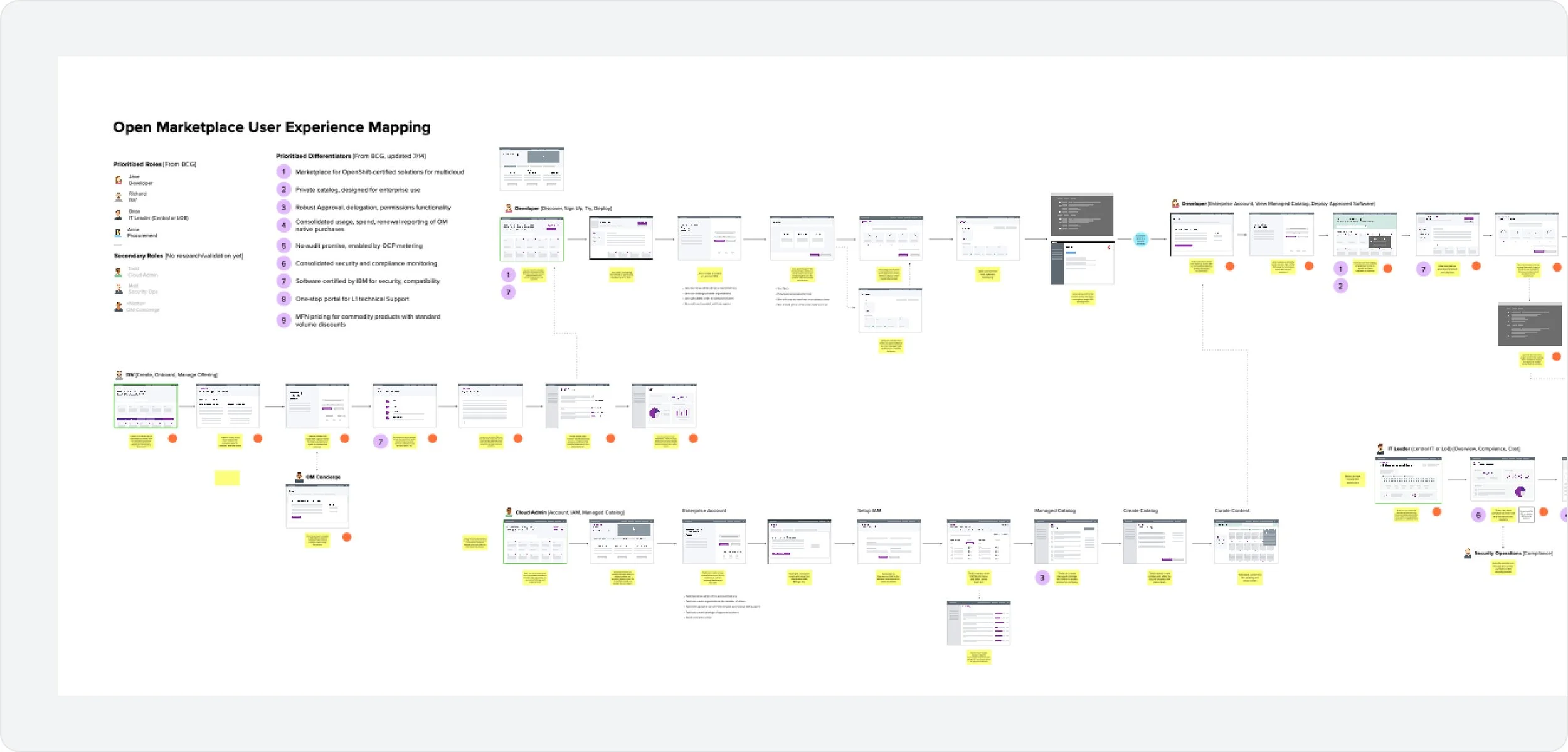
Mapping the User Journey
Throughout each major project milestone, the team collaborated to create to-be journeys that were used to align the product, development, design and executive leaders around a common understanding of each milestone. These maps, along with their corresponding prototypes aided in project estimation and were used as a measurement at the end of each completed milestone.
Planning Workshops
Throughout each major project milestone, to-be journeys were created to align the product, development, design and executive leaders around a common understanding of each milestone. These maps, along with their corresponding prototypes aided in project estimation and were used as a measurement at the end of each completed milestone.
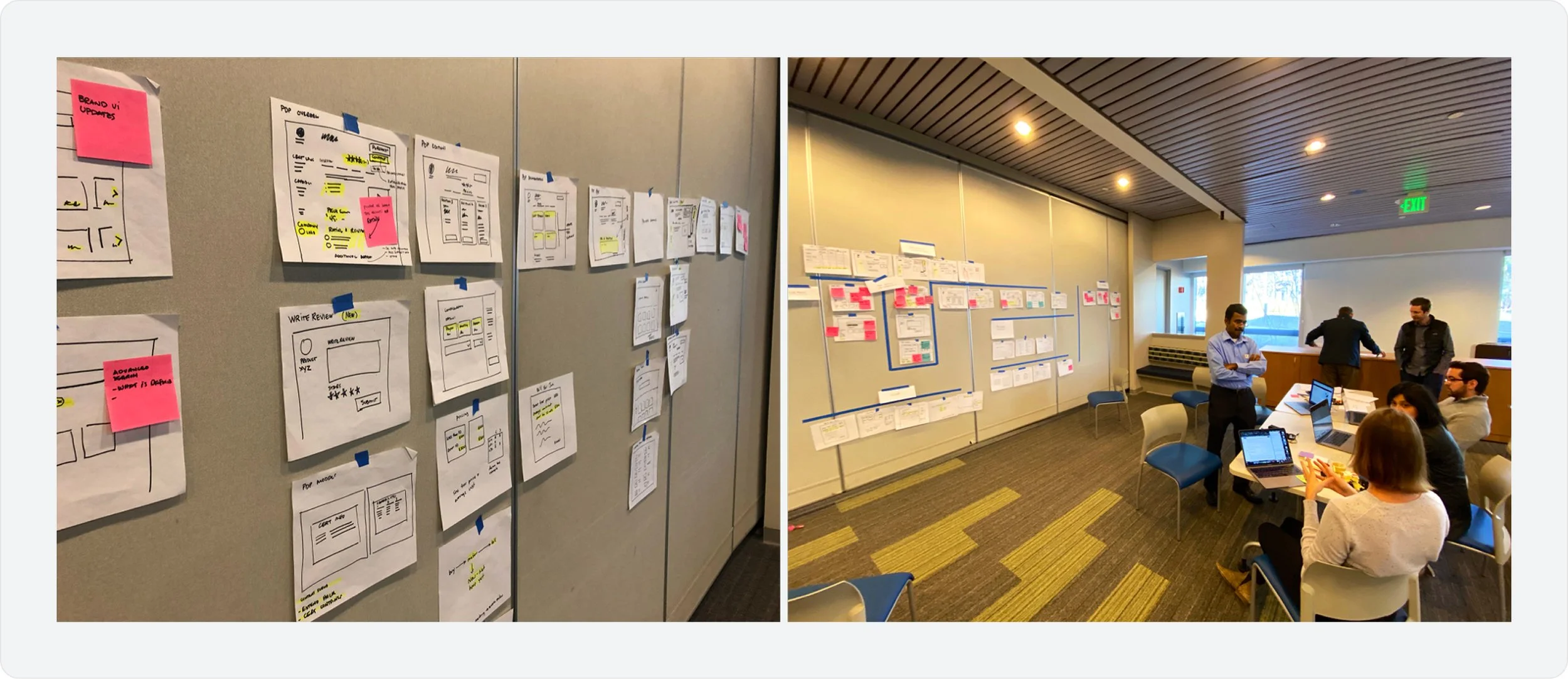
In-person workshops were a time to come together to map out the next milestone in the product.
My Role and Contribution
Throughout the lifecycle of the project, my role evolved to take on increasing levels of responsibilities on the product. As the team grew, I led multiple user journeys and mentored junior designers on the team.
As I onboarded on the project, I quickly took ownership of the support experience and the manage purchases experience. I designed the “My Software” space, which included capability for a variety of product types as well as the ability to bring your own license.
My role evolved to define complex features that spanned across multiple journeys. I partnered with stakeholders and helped lead collaborative design efforts that led to MVP designs for bundles in datasets and a feature that enables users to bring their own license. I also led the initial milestone for usage-based purchases.
My Process
Software Management
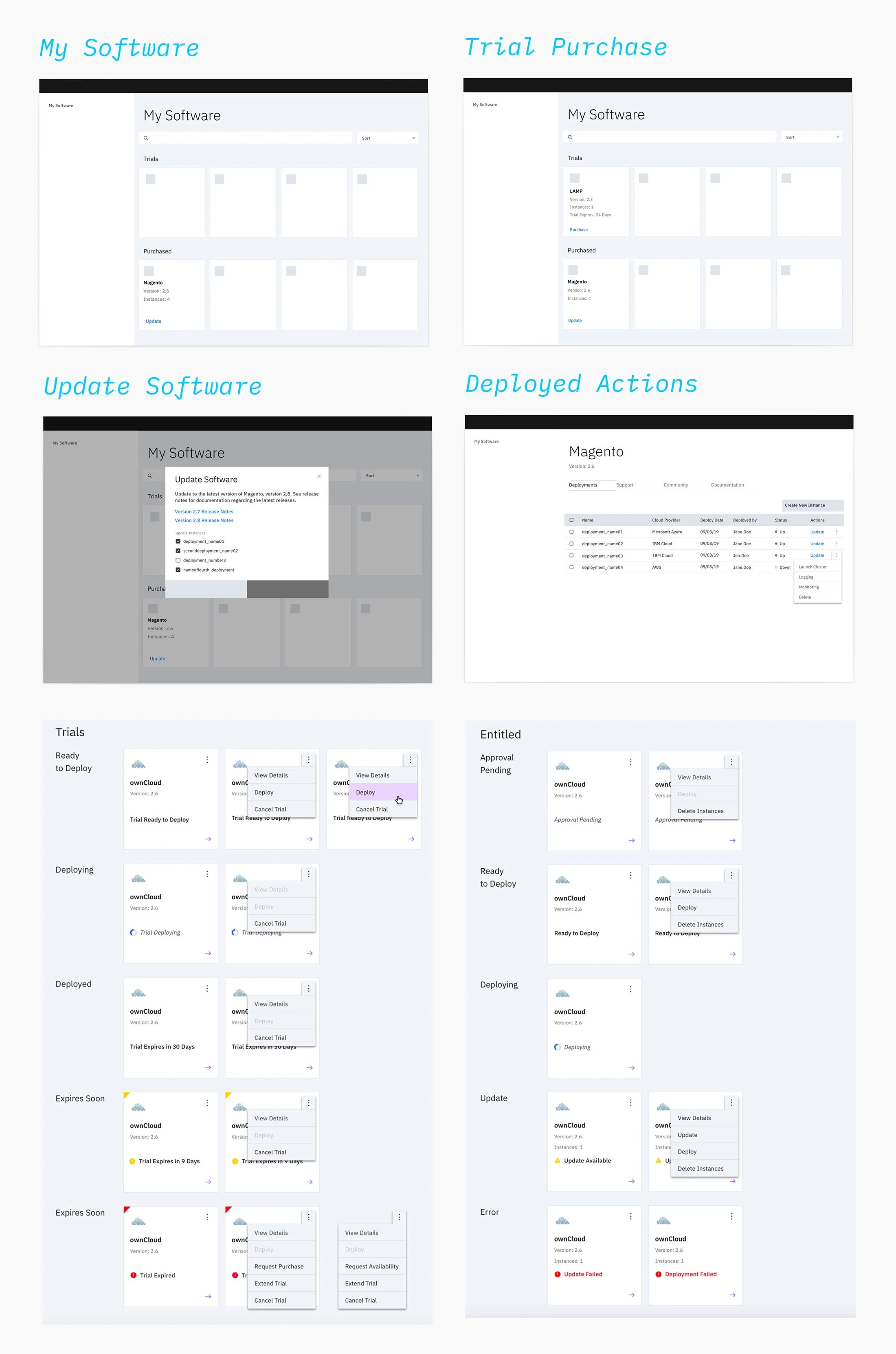
Developers needed to be able to manage the software they purchased. I began cataloging all of the actions needed on single piece of software — updating, deploying, purchasing a trial, removing, renewing a subscription. I created low-fidelity wireframes for these flows and compiled a list of questions to investigate and narrowed the scope for MVP. As requirements became more defined, so did the design. The My Software page would be the hub for all purchased software. I designed the card that would represent purchased software and house the actions and states of the purchase. I also created the details page for purchases software where a developer could deploy or get support.

Launching an MVP
At our launch of an MVP product, users could complete a “golden thread” — a core set of journeys that enabled users to:
Get started and create an account
Find a product that meets their needs
Try or buy the product they need
Use the product they purchased
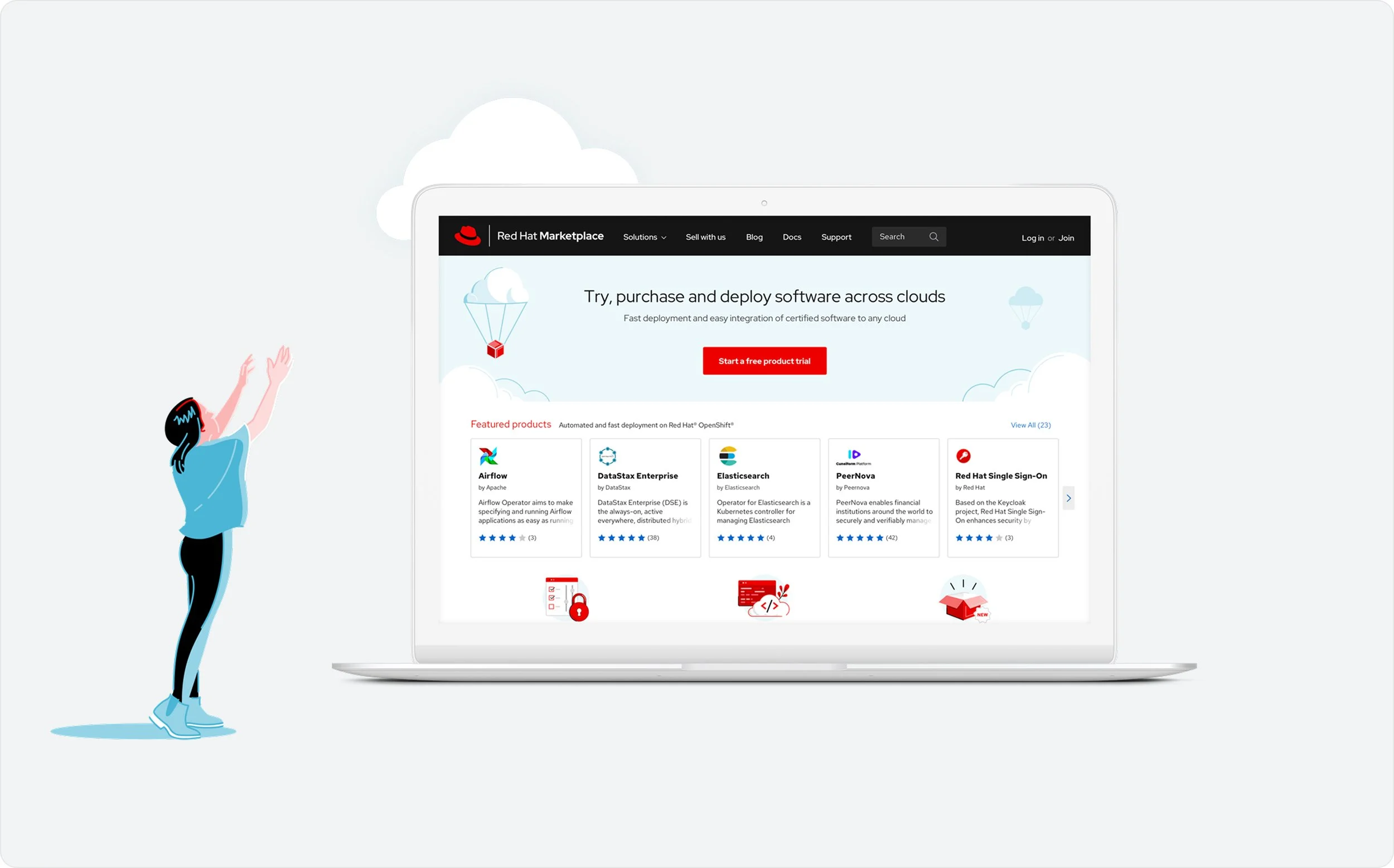
At MVP launch users were able to create an account, search for products, try or buy, and use the software they purchased.
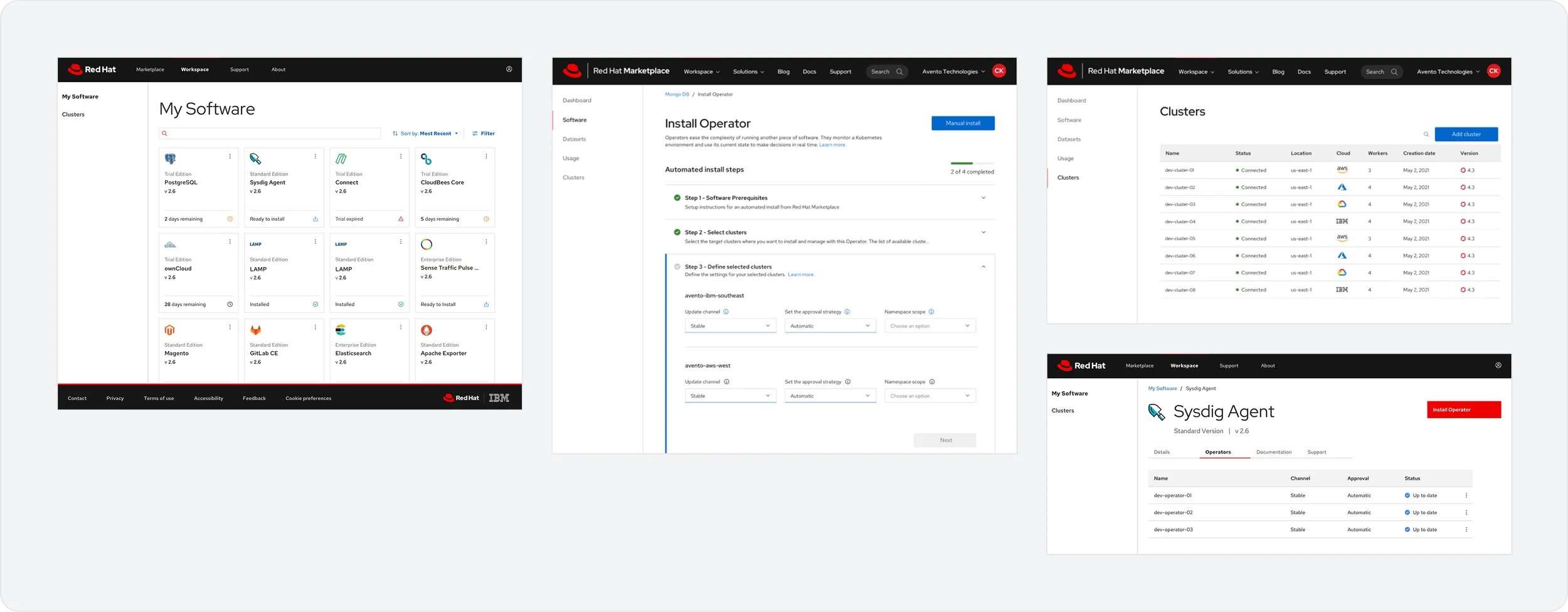
I led the design of the post-purchase user journey.
Usage-Based Purchases
After the initial launch of Red Hat Marketplace, we shifted focus to our procurement managers. They need the ability to manage usage and allocation of purchased products. I co-led the design to solve for this need:
A developer needs to understand what has been used and how much is left in the current plan.
An IT leader and procurement manager need to see spending trends.
Helping our users understand usage was an extremely complex problem given multiple types of metrics, data availability, and allocating by department. I designed a chart that combined total usage and usage by department. This chart was repurposed and also used on the new usage dashboard.
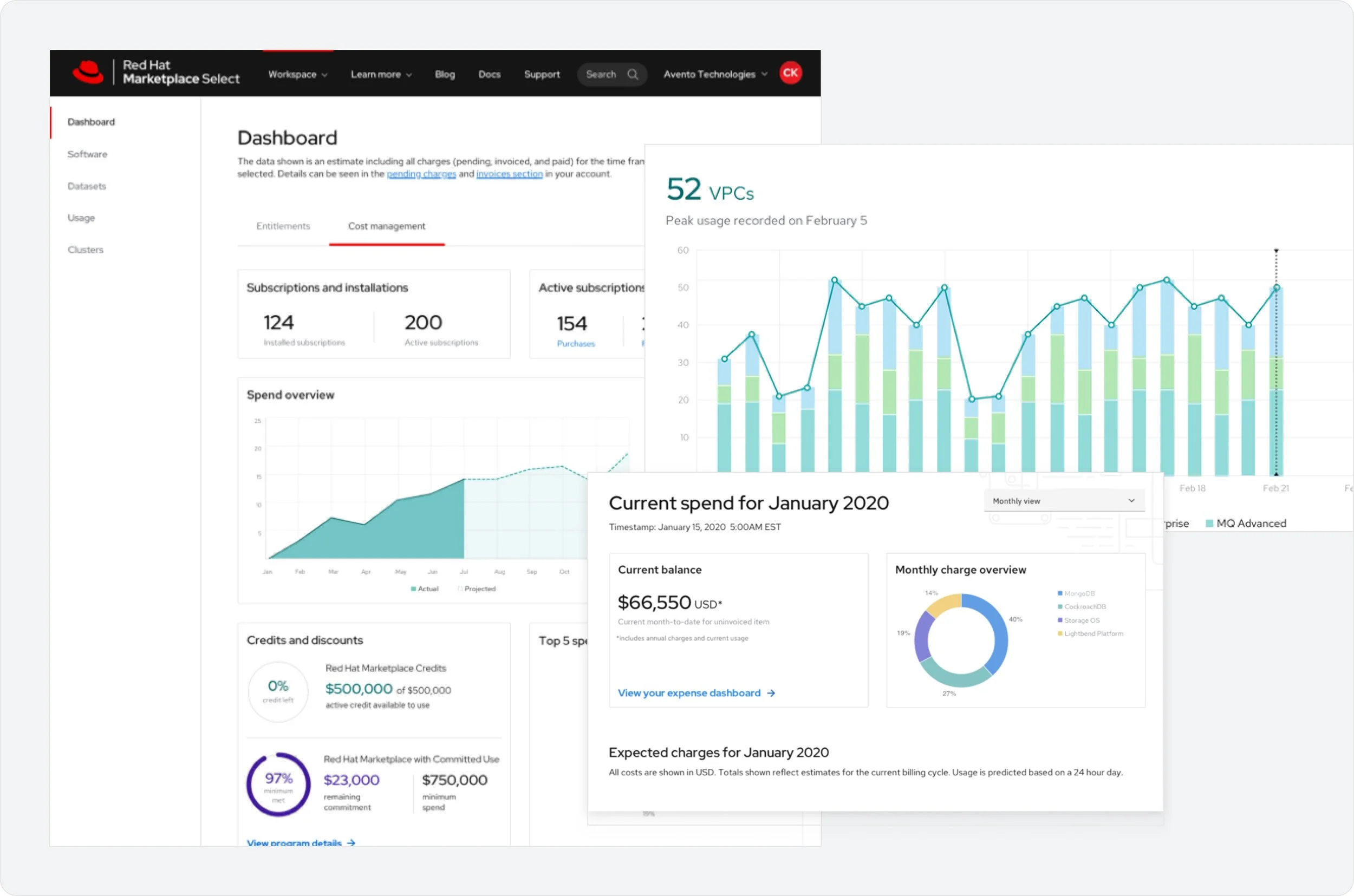
The usage-based designs included data visualizations I created.
Team and Individual Recognition
I was recognized for my contribution through several avenues, including being selected for Positive Leadership Edge workshop, and selected as a Design Luminary: Breakout Leader and Eminence and Excellence award. My manager recognized my work in this project saying, “One of her many superpowers is her ability to think end to end. She never designs in a silo, but always looking across the entire experience.”
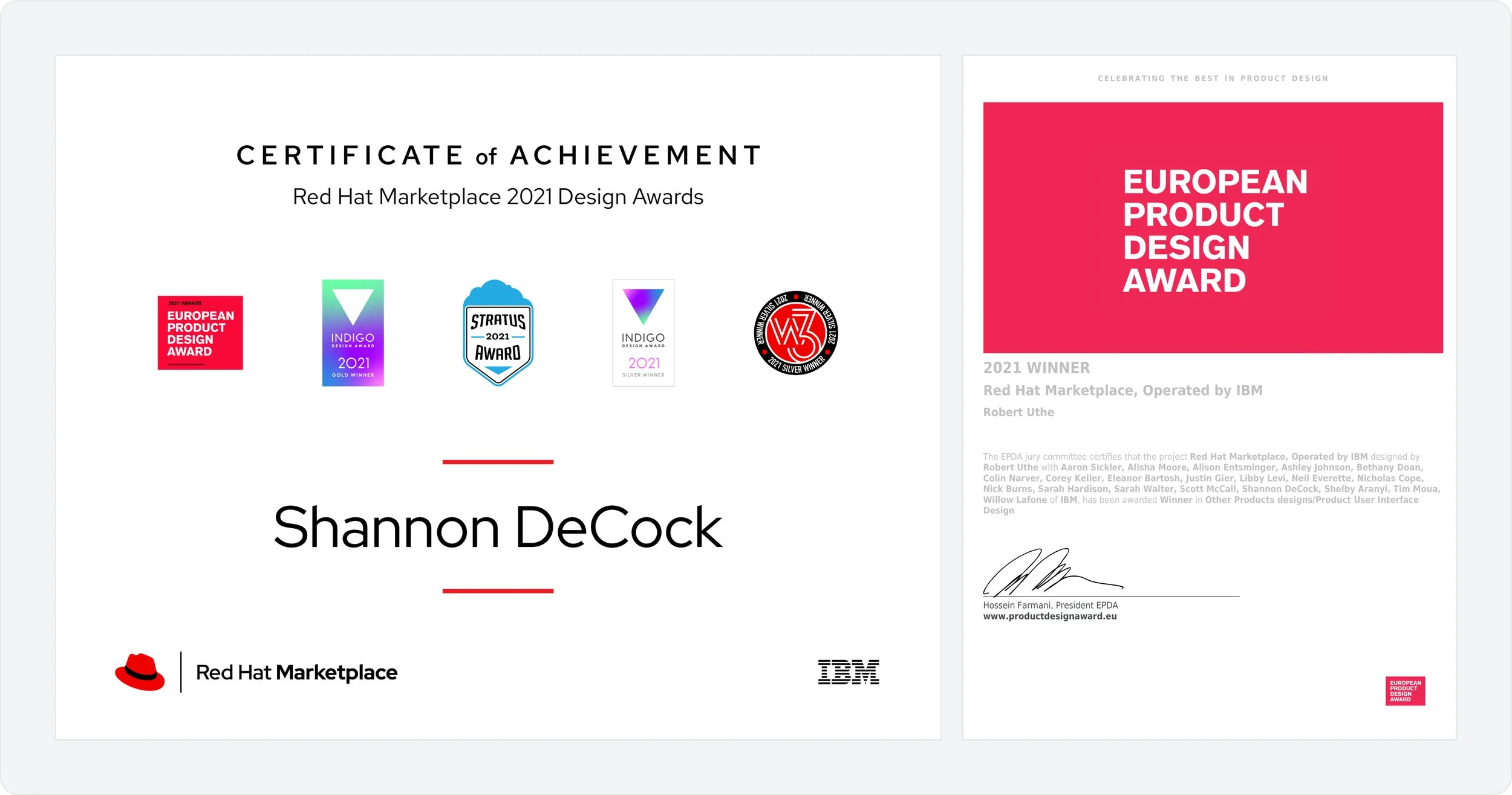
In 2022, our team received recognition for excellence in design. We took home the following team awards:
Indigo Award: Gold - UX Interface & Navigation
Indigo Awards: Silver - Animation & Illustration for Websites
European Product Design Award
Stratus Award
w3 Award: Silver